


Tamil death announcement cards, made with care
A Tamil death announcement card is a short notice that tells relatives, friends and neighbours about a passing and the rites that follow. In many Tamil families the card is one of the first things prepared after a loss. It carries the name of the departed, the date and place of death, and the details of the funeral, the prayer meeting or the shraddhanjali gathering, so that people can come together and pay their respects. This page explains what the card should contain, how to choose a maroon and gold design, how to write a respectful message, and how to share the card so that the right people receive it in time.
Every design on this page can be edited in the editor. You choose a design, fill in the names, dates and message, and download a clean A4 file that is ready to print for a community noticeboard or send on WhatsApp to relatives in other cities and countries.
What is a Tamil death announcement card?
A death announcement card is a printed or digital notice that informs people about a death in a calm and dignified way. In Tamil families it usually gives the essential facts in a short space: the full name, the date and place of passing, and the arrangements for the funeral or the memorial gathering. Many families also add a line of prayer or a short message of comfort. Although the card is brief, it helps a community organise its support and attend the rites at a difficult time.
Many families print the main text in Tamil because elder relatives read the language most comfortably. Younger members, friends and relatives living abroad often ask for a short English line as well, so that the notice can be understood on a phone. Whichever format you choose, the card should be clear, calm and easy to read at a glance, whether it is pinned on a community board, handed out at a temple or forwarded in a family group chat.
What to include on your Tamil death announcement
A well organised card usually begins with a simple symbol or invocation at the top, such as a lamp or a floral motif, depending on the family's tradition. The name of the departed comes next, followed by the age if the family wishes to include it, and then the date and place of passing. The card then lists the arrangements: the date, time and venue of the funeral, the prayer meeting or the shraddhanjali gathering, and the place of cremation or burial. If a later ceremony is planned, mention its date as well. Finally, add the names of the family members or the contact persons who can answer questions about the gathering.
Some families add a short line of thanks to the community, or a verse or thought that held meaning for the departed. If you include a verse, check the wording with a senior family member before printing, because a small change in spelling can alter the meaning. A photograph is optional. If you use one, choose a clear and recent portrait and place it in the framed area, where it will be visible on both screen and paper.
Choosing a maroon and gold design
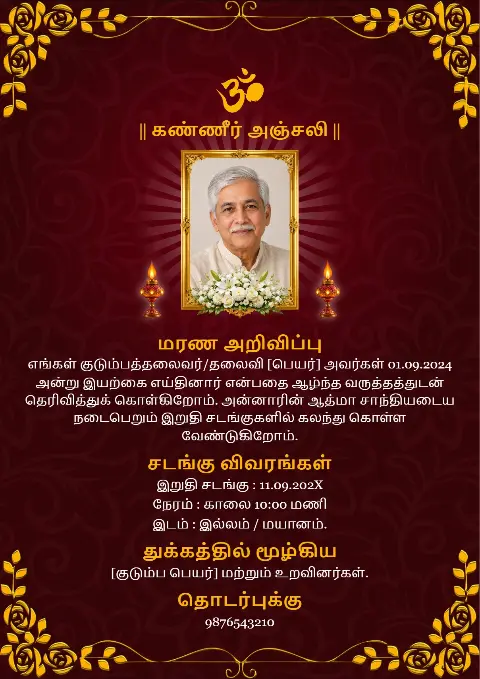
The design sets the tone before anyone reads a word. Maroon and gold is a popular choice for a Tamil death announcement because it feels formal and dignified without looking heavy. Gold floral corners frame the text neatly, and a central symbol or lamp motif makes the purpose of the card clear at once. A gold framed portrait area draws the eye to the person being remembered, while a soft background keeps the rest of the card calm.
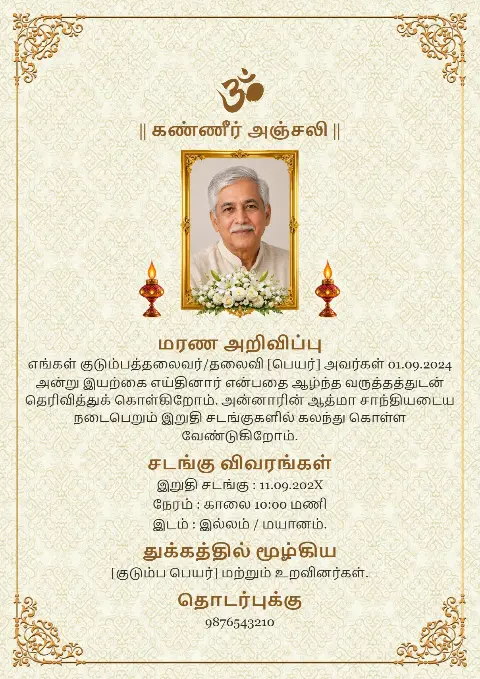
Ivory and damask designs with a diya are another common choice. They suit families who prefer a lighter look, and they print clearly on standard white paper. When you compare designs, look for enough room for Tamil text, space for family names, and a border that still looks good in black and white on a photocopier. A design that prints well is often more useful than one that looks impressive only on a screen.
Writing the message with respect
The message on a death announcement should be short and sincere. Begin with the name of the departed, state the fact of the passing in simple words, and then ask relatives and friends to pray for the peace of the soul. Many families also invite everyone to attend the funeral or the prayer meeting. Avoid long stories or anything that reads like a eulogy, unless the family has chosen to hold a separate memorial. Short and clear text is easier for elder relatives and guests from other towns to follow.
Check every spelling carefully, especially the names of villages, crematoriums, temples, halls and relatives. Confirm the date and time with the family before you finalise the card, because one wrong digit can confuse everyone who plans to attend. The editor lets you change each field separately. If the timing of a gathering changes, you can update the card and download a fresh copy in a few minutes.
Printing, sharing and keeping copies
Once the details are complete, download the card as an A4 file and print it at home or at a local print shop. A4 is the usual size for notices that are pinned on boards or handed out at a temple or community hall. If you plan to print in colour, check the preview first, since gold tones can look different on different printers. For quick sharing, the image version works well on WhatsApp and other messaging apps, and it can reach relatives in several cities within minutes.
Keep a few printed copies for the family record and a digital copy in a safe folder. If the card is shared in a public group, leave out private information such as home addresses, bank details or personal phone numbers. Share the arrangements with the people who need them, and let the family decide what goes into a wider group.
Frequently asked questions
Common questions about making a Tamil death announcement card online.