
Punjabi antim ardas cards, made with care
An antim ardas card is one of the most important notices a Punjabi family prepares. It tells relatives, friends and the wider community that a loved one has passed away, and it invites them to join the final prayer. This page explains what the card is for, what it should include, how to choose a design, and how to share it in a way that respects the family and the occasion.
Every design on this page is made for a Punjabi notice, so the layout, the symbols and the space for text are chosen with the purpose of the card in mind. You can pick a design, fill in the details in the editor, and download an A4 file that is ready to print or share.
What is a Punjabi antim ardas card?
An antim ardas card is a printed or digital notice that informs people about a death and the prayer that will be offered for the departed soul. In Punjabi and Sikh families, the antim ardas is the final prayer, and the card gives the date, place and time so that people can join the congregation, offer their condolences and remember the person who has passed away. It is a short and respectful document, but it carries a great deal of meaning because it brings a community together at a difficult time.
Many families print the card with the main text in Gurmukhi script, since older relatives often read Punjabi more comfortably than English. Others add a short English line below for relatives living abroad. Whichever approach you choose, the card should be clear and calm, and easy to read at a glance. It may be shared on phones, pinned on a gurdwara noticeboard or placed on a table at the family home.
What to include on the card
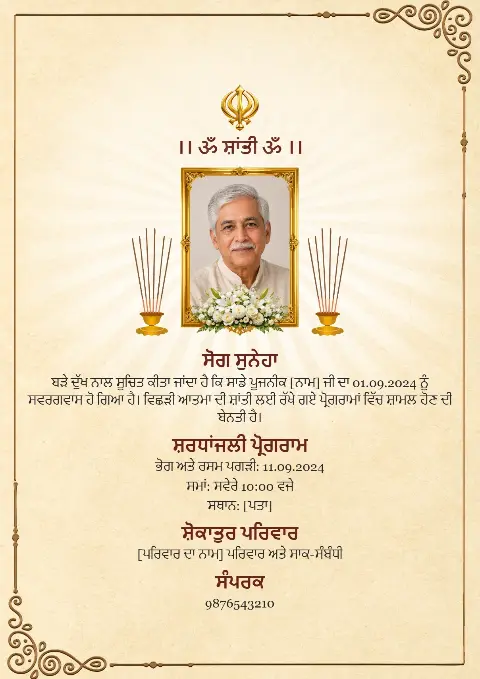
A well organised card usually begins with the Khanda symbol or a simple invocation at the top. The name of the departed comes next, along with the age if the family wishes to include it, followed by the date and place of passing. The card then gives the details of the antim ardas, including the date, time and location of the gurdwara or home where the prayer will be held. Where relevant, it also mentions the date of the bhog ceremony. Finally, it lists the family members or contact persons who can be reached for questions about the arrangements.
Some families add a line of gratitude to the community or a verse from Gurbani that they find comforting. If you include a verse, check its exact wording with someone in your family or gurdwara before printing, because small differences in spelling can change the meaning. A photo is optional. If you use one, choose a clear and recent portrait and place it in the framed area, where it will be easy to see on both screen and paper.
Choosing a design with Khanda and gold florals
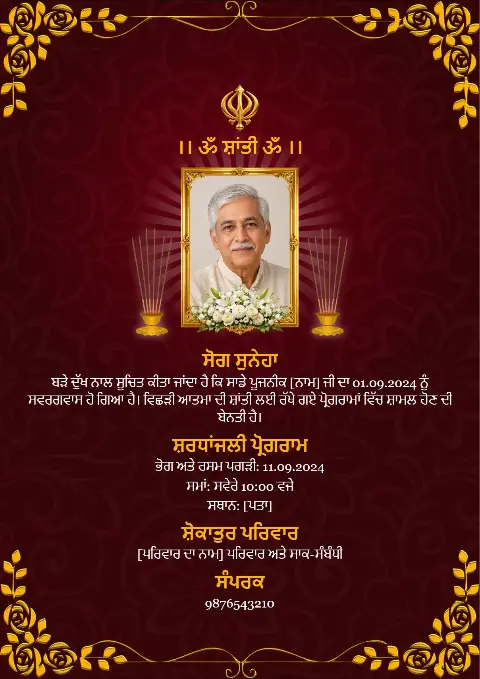
The design of an antim ardas card sets the tone before anyone reads a word. Maroon and gold is a popular combination because it feels formal and dignified without looking heavy. Gold floral corners frame the text neatly, and a central Khanda symbol makes the purpose of the card clear at once. A gold framed portrait area draws the eye to the person being remembered, while the soft background keeps the rest of the card calm.
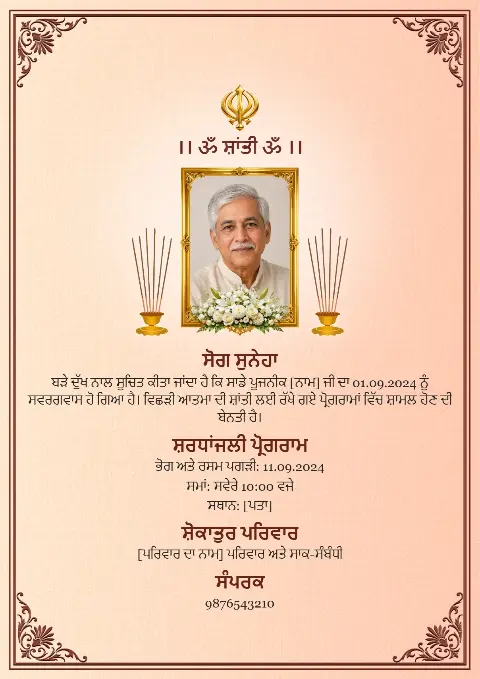
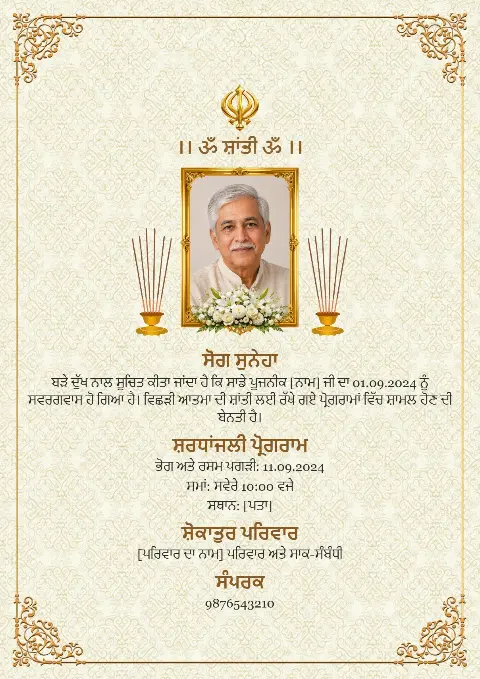
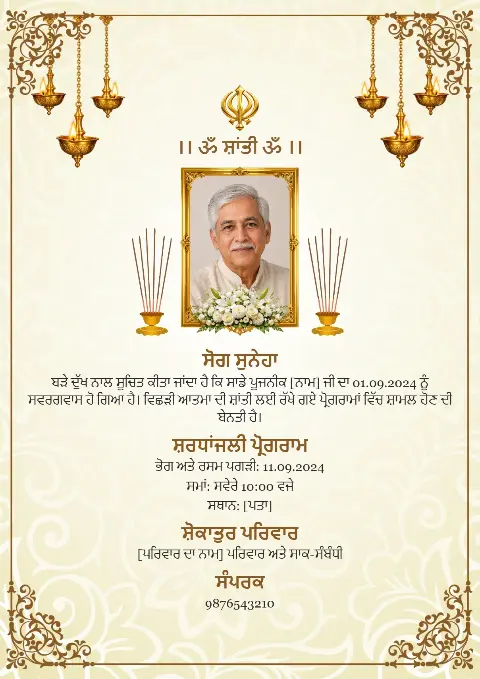
Punjabi designs often use a few visual cues: a swirl or floral border, a simple incense or lamp motif, and open space around the text so that longer messages do not feel crowded. When you browse the designs on this page, look for clear room for the Punjabi text, enough space for family names, and a border that still looks good when printed in black and white on a photocopier. A design that prints well is often more useful than one that only looks impressive on a screen.
Writing the message respectfully
The message on an antim ardas card should be short and sincere. Begin with the name of the departed, then state the fact of the passing in simple words. Many families add a line asking for prayers for the peace of the soul, and a line inviting everyone to attend the ardas. Avoid long stories or anything that reads like a eulogy, unless the family has chosen to hold a separate memorial. The shorter and clearer the text, the easier it is for elderly relatives and guests from other villages to follow the arrangements.
Check spellings carefully, especially the names of villages, gurdwaras and relatives. Confirm the date and time with the family before you finalise the card, because one wrong digit can confuse everyone who plans to attend. The editor lets you change each field separately, so if plans change, such as a new time for the prayer, you can update the card quickly and download a fresh copy.