


Hindi shok sandesh cards, made simply
A Hindi shok sandesh card, also known as a शोक संदेश कार्ड, is a short notice that tells family, relatives and the wider community about a death. It gives the name of the departed, the date and place of passing, and the details of the prayer meeting, shraddhanjali sabha or last rites. Many Hindi-speaking families prepare this card soon after a loss, so that people who knew the departed can come together and offer their respects. This page explains what the card should contain, how to choose a design, how to write a respectful message, and how to share it with the right people in time.
You can choose a design, add the names, dates and timings in the editor, and download a clean A4 file that is ready to print. The same file can be shared as an image on WhatsApp within minutes, which is useful when relatives live in different cities.
What is a Hindi shok sandesh card?
A shok sandesh is a printed or digital message of sorrow. The word shok means grief and sandesh means message, so the card is a short announcement shared with everyone who knew the departed. Its purpose is practical as well as emotional. It tells people what has happened, and it gives them the information they need to attend the prayer meeting or the rites that follow. Because the card is read quickly, its layout and wording matter a great deal. A clear and calm notice is easier for elderly relatives, neighbours and colleagues to understand at a glance.
In earlier times these notices were printed in a small press and delivered by hand. Today many families prepare the card on a phone or computer, then print a few copies for the home and the community board, and send the image to relatives and friends. The same design works for both uses, provided the text is large enough and the layout leaves enough space for the details.
What to include on a shok sandesh card
A well organised card usually begins with a simple symbol or invocation at the top, such as an Om sign, a diya or a floral motif, depending on the family's tradition. The name of the departed comes next, followed by the age if the family wishes to include it, and the date and place of passing. The card then lists the arrangements: the date, time and venue of the prayer meeting, shraddhanjali sabha or last rites, and any later ceremony. Finally, add the names of family members or a contact person who can answer questions about the gathering.
Some families also add a short line of thanks to the community or a thought from scripture that held meaning for the departed. If you include a quotation, check the wording with a senior family member before printing, because a small change in spelling can change the meaning. A photograph is optional. If you use one, choose a clear and recent portrait and place it in the framed area, where it will be visible on both screen and paper.
Choosing a design for your notice
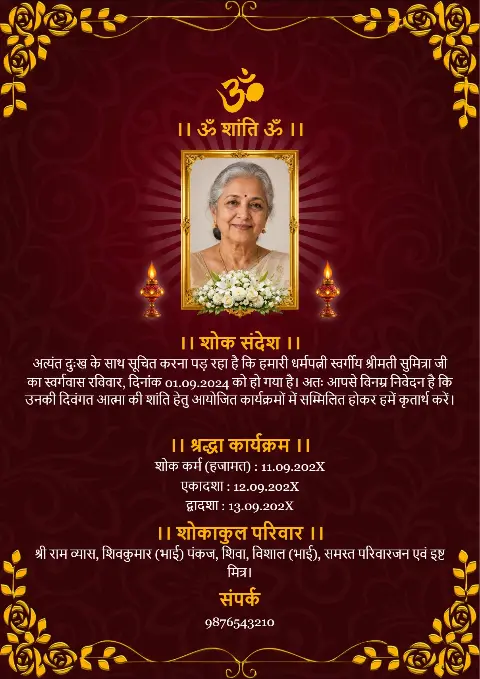
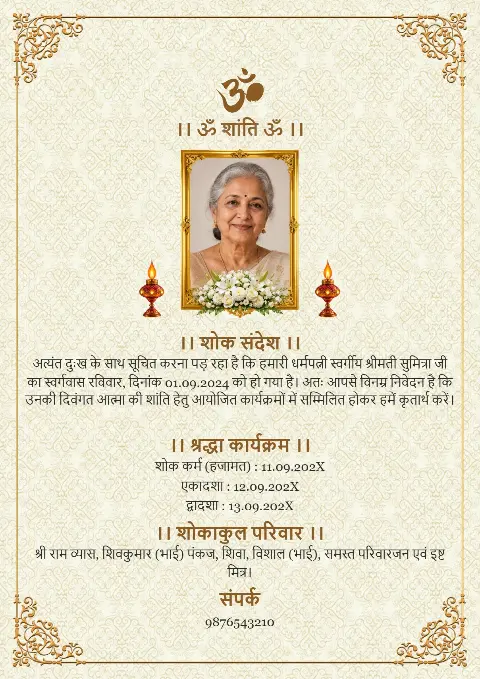
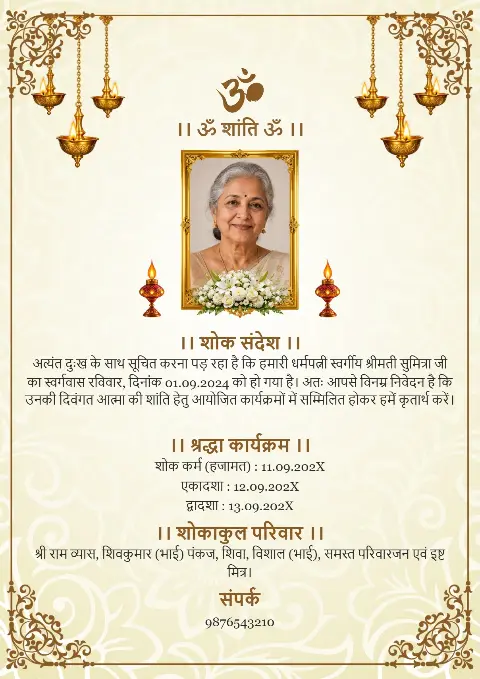
The design sets the tone before anyone reads a word. Maroon and gold is a popular choice because it feels formal and dignified without looking heavy. Floral corners frame the text neatly, and a central symbol makes the purpose of the card clear at once. A framed portrait area draws the eye to the person being remembered, while a soft background keeps the rest of the card calm. Ivory and filigree designs with a diya motif are another common choice for families who prefer a lighter look.
When you compare designs, look for enough room for Hindi text, space for family names, and a border that still looks clear when printed in black and white on a home printer. A design that prints well is often more useful than one that looks impressive only on a screen, because most families share both a printed copy and a digital one.
Writing the message with respect
The message on a shok sandesh should be short and sincere. Begin with the name of the departed, state the fact of the passing in simple words, and then ask relatives and friends to pray for the peace of the soul. Many families also invite everyone to attend the prayer meeting or the last rites. Avoid long stories or anything that reads like a eulogy, unless the family has chosen to hold a separate memorial. Short and clear text is easier for elderly relatives and guests from other towns to follow.
Check every spelling carefully, especially the names of villages, crematoriums, temples, halls and relatives. Confirm the date and time with the family before you finalise the card, because one wrong digit can confuse everyone who plans to attend. The editor lets you change each field separately. If the timing of a gathering changes, update the card and download a fresh copy in a few minutes.
Printing, sharing and keeping copies
When the details are complete, download the card as an A4 file and print it at home or at a local print shop. A4 is the usual size for notices that are pinned on boards or handed out at a temple or community hall. If you plan to print in colour, check the preview first, since gold tones can look different on different printers. For quick sharing, the image version works well on WhatsApp and other messaging apps, so it can reach relatives in several cities within minutes.
Keep a few printed copies for the family record and a digital copy in a safe folder. If the card is shared in a public group, leave out private information such as home addresses, bank details or personal phone numbers. Share the arrangements with the people who need them, and let the family decide what goes into a wider circulation.
Frequently asked questions
Common questions about making a Hindi shok sandesh card online.